
Fisáyọ̀ Ajibola
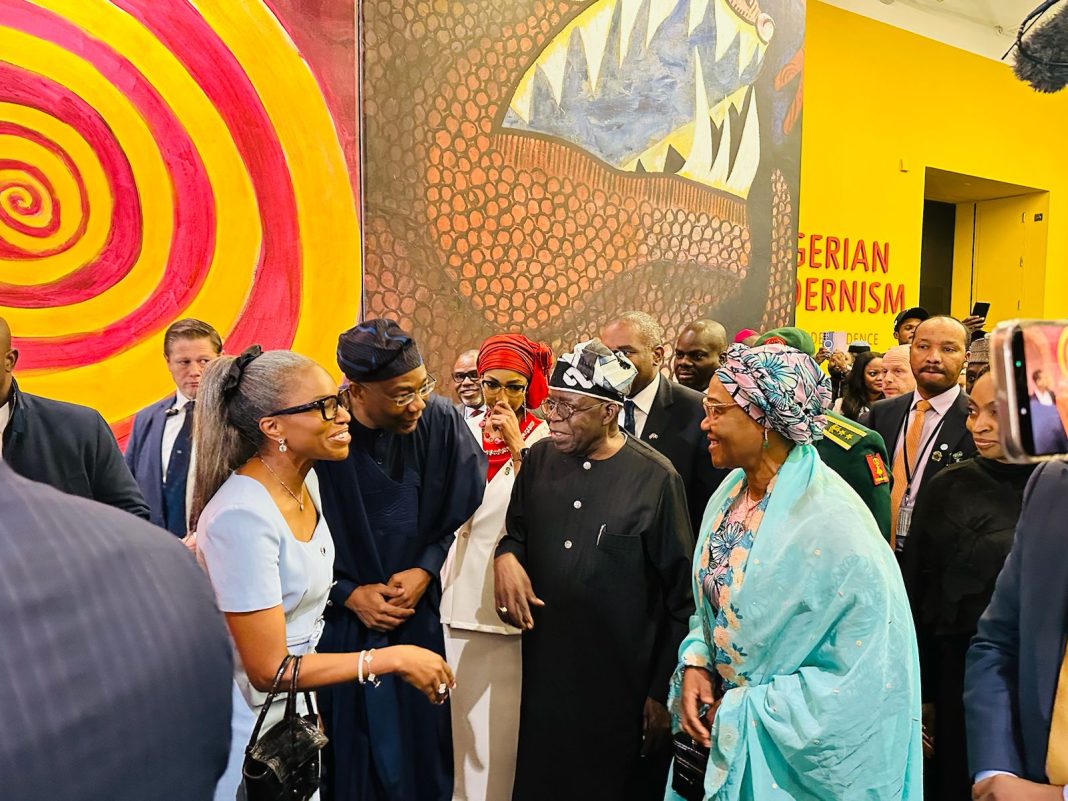
When President Bola Ahmed Tinubu walked through the halls of the Tate Modern to experience the Nigerian Modernism exhibition, it was a defining moment and one that speaks directly to Nigeria’s cultural renaissance, the rising power of its creative economy, and the broader trajectory of Africa’s development.
At its core, the visit signals a shift in how Nigeria positions culture: not as a soft, peripheral asset, but as a central pillar of national identity, economic growth, and global influence.
A Cultural Renaissance Reclaimed
The Nigerian Modernism exhibition represents a generation of artists who, in the mid-20th century, broke free from colonial artistic frameworks to create a bold, independent voice. By engaging with this body of work on a global stage, President Tinubu effectively reconnected Nigeria’s present with a powerful moment of cultural self-definition.
His presence at the exhibition elevates that history from artistic memory to national priority.
It sends a clear message: Nigeria is rediscovering its culture, reclaiming and projecting it with intention. In doing so, the country strengthens its cultural confidence at a time when identity and narrative are critical currencies in global engagement.
For decades, African stories were often told through external lenses. Moments like this help reverse that dynamic, placing ownership of narrative firmly back in African hands.
Culture as Economic Strategy
Beyond symbolism, the visit underscores a growing recognition that culture is serious business.
Nigeria’s creative industries, spanning visual arts, music, film, fashion, and literature, have already demonstrated their global appeal. Afrobeats dominates international charts, Nollywood ranks among the world’s largest film industries, and African art continues to command rising attention in global galleries and auctions.
By spotlighting Nigerian art at the Tate Modern, one of the world’s most influential cultural institutions, the visit amplifies the commercial potential of these industries.
It positions creativity as an export, one capable of generating jobs, attracting foreign investment, and diversifying the economy beyond traditional sectors like oil and gas.
In practical terms, such visibility can drive increased global demand for Nigerian art and artists; greater institutional partnerships and cultural exchanges; expanded opportunities for galleries, curators, and creative entrepreneurs, and stronger investor confidence in Africa’s creative sector.
The message is clear: the creative economy is no longer emerging, it is already here, and it is scalable.
Strengthening Cultural Diplomacy
President Tinubu’s engagement with the exhibition also reflects a strategic use of cultural diplomacy.
In a world where influence is increasingly shaped by perception, culture offers a powerful bridge between nations. It humanises policy, builds emotional connections, and creates shared spaces of understanding.
At the Tate Modern, Nigeria was not negotiating trade deals or policy frameworks, it was telling its story. And that story was deep with a global audience that included policymakers, investors, and cultural leaders.
This kind of engagement strengthens Nigeria’s international standing, as economic player and cultural force.
It also deepens relationships with countries like the United Kingdom, where historical ties are being redefined through contemporary collaboration in art, innovation, and enterprise.
A Catalyst for Africa’s Development
While the moment was distinctly Nigerian, its implications extend across Africa.
Nigeria, as one of the continent’s largest economies and cultural exporters, often sets the tone for broader African trends. By elevating its creative sector on a global platform, it creates a ripple effect, opening doors for other African artists, institutions, and markets.
This is how cultural ecosystems grow: through visibility, validation, and collaboration.
Africa’s development story has long been framed around natural resources and infrastructure.
But the future is increasingly shaped by intangible assets, including ideas, creativity, and intellectual property.
The creative economy offers a pathway to youth employment in a continent with a rapidly growing young population; digital innovation, particularly in content creation and distribution; global cultural influence, reshaping how Africa is perceived and engaged, and Inclusive growth, where talent and capital drive opportunity.
In this context, President Tinubu’s visit becomes symbolic and catalytic.
Bridging Heritage and the Future
Perhaps the most powerful aspect of the visit lies in its ability to connect past, present, and future.
The artists of the Nigerian Modernist movement redefined identity in their time. Today’s creatives are doing the same, only on a global, digital stage. By honouring that lineage, the visit creates continuity, reminding a new generation that innovation is rooted in heritage.
It also challenges policymakers and institutions to match cultural ambition with structural support, through funding, education, intellectual property protection, and global market access.
Because for a cultural renaissance to be sustained, it must be backed by systems that allow creativity to thrive as both art and enterprise.
A Defining Signal
In the final analysis, President Tinubu’s presence at the Tate Modern sends a defining signal: Nigeria understands the power of its culture and is ready to invest in it as a driver of national and continental transformation.
It affirms that Africa’s future will not be built on resources alone, but on stories, ideas, and creative expression. And in that future, culture will not sit on the sidelines, it will lead.