
The Central Bank of Nigeria (CBN), yesterday, cut the Monetary Policy Rate (MPT) from 26.5 percent to 23 percent.
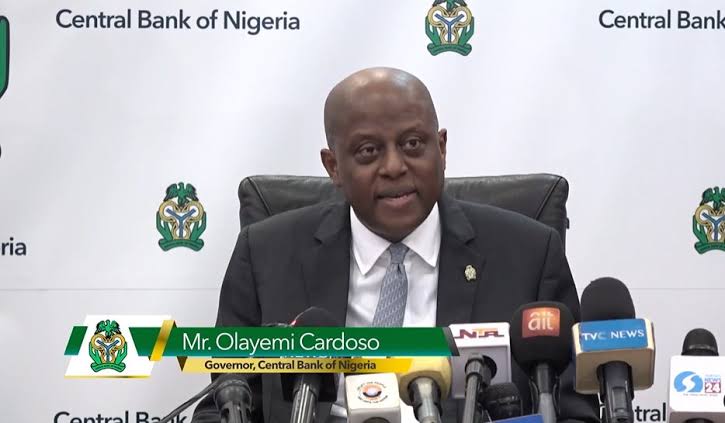
The Governor of the bank, Mr. Olayemi Cardoso, who announced the new rate at the end of the 307th Monetary Policy Committee (MPC) meeting, in Abuja, described the decision as resetting it to meet the current financial market realities.
He added that the committee decided to, “Recalibrate the standing facilities’ corridor to +50/-300 basis points around the MPR; retain the Cash Reserves Requirement (CRR) for Deposit Money Banks at 45 percent, Merchant Banks at 16 percent and Non TSA public sector deposits at 75 percent.”
The CBN boss said the decision to reset the MPR and recalibrate the policy corridor should be seen as, “an important operational realignment aimed at strengthening monetary policy transmission and forcing the primacy of the monetary rate.”
No change to stance
Governor Cardoso emphasized that the new corridor does not constitute a change in the current monetary policy stance but rather an operational reset to enhance the effectiveness of operational monetary policy and support the transition to an inflation targeting framework.
His words, “Members (of MPC) are of the view that the current macroeconomic environment remains supportive of such a recalibration without undermining the disinflation process. Considerations.
“In arriving at this decision, the committee noted that the observed divergence between the MPR and the prevailing market rates had weakened the effectiveness of monetary policy transmission.
“Members noted that the bank’s ongoing repair of the monetary policy implementation framework, including the adoption of NOFA as a transaction-based operational benchmark, has improved the transparency of money market operations.
“The committee therefore considered a reset of the MPR and recalibration of the corridor appropriate to better align the monetary policy implementation framework with market realities.
“This would strengthen policy transmission and restore the MPR as a principal signal of monetary policy. Members emphasized that the recalibration represents an operational realignment of the framework and should not in itself be construed as a change in the underlying policy stance.”
The governor added that with the current stability in the market, there was no better time to adjust the rate than now.
His words, “We are in a position of stability. The tightening we have done in the past has worked. FX pressure has receded. Capital market growth is because of the FX market stability. Investor confidence has come back. We have nothing to fear. This is a reset and a recalibration. No better time to do it than now when things are stable.”
Mr. Cardoso said that the past tightening actions had achieved increased resilience demonstrated by the Nigerian economy, reflected by the moderating inflation, robust external reserve buffers, improved external sector fundamentals, and strengthening investor confidence.
According to the CBN boss, “Members observed that the moderation in inflation indicated the effectiveness of previous policy tightening measures, sustained exchange rate stability, and improved inflation expectations.”
$55 b External Reserves
Mr. Cardoso put the nation’s Gross External Reserves at 55.25 billion as of September 18, 2026, the highest in the last 18 years, and sufficient to finance approximately 11.3 months of import of goods and services.”
The governor, who clocked three years in office yesterday, said that his team at the CBN has recorded great achievements particularly by stabilizing the exchange rate, through the unification policy.
According to him, before his assumption of office, while the nation was subsiding fuel up to 2 percent of the Gross Domestic Product (GDP), the exchange subsidy was as high as 3 percent of GDP.
He said there was no way the economy could accommodate a combined subsidy of 5 percent of the DGP and that the steps his administration took through various reforms saved the economy from disaster.
Rebuilding the external reserves, the successful recapitalization and high Diaspora remittances were other achievements that the governor said he was proud of.