
There comes a defining moment in the life of a people when silence is no longer neutrality, but complicity. Ondo State is fast approaching that moment. Before I begin, I must first acknowledge and commend those who have courageously raised their voices, insisting on fairness and equity in the conversation about the next governor of our great state.
Let us be clear from the outset: this is not about personal ambition, nor is it about targeting any individual for the sake of politics. It is about justice, balance, and the preservation of stability in Ondo State.
In politics, what is not written can often be more powerful than what is. Nowhere is this more evident than in the principle of zoning within Nigeria’s political system.
The emergence of President Bola Ahmed Tinubu in 2023 was not merely the product of political maneuvering—it reflected a broader national consensus that, after eight years under late President Muhammadu Buhari, power should return to the South. Though not codified in the APC constitution, this understanding helped preserve balance, stability, and national cohesion.
Ondo State now stands at a similar crossroads.
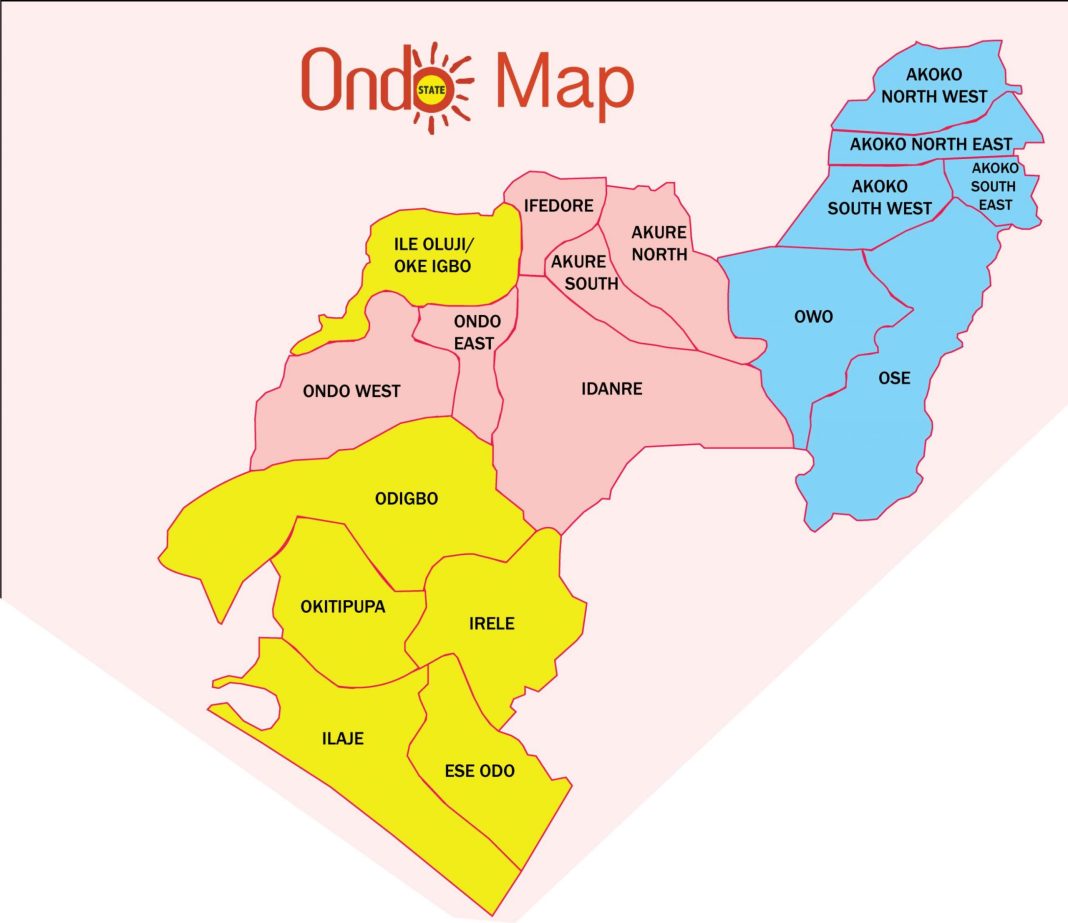
For decades, the distribution of political power within the state has been uneven. Ondo North has produced respected governors such as Adekunle Ajasin, Adebayo Adefarati, and Rotimi Akeredolu. Ondo South has also had its fair share of governoship, producing Olusegun Agagu and currently holding the governorship under Lucky Aiyedatiwa.
Yet Ondo Central—despite being the administrative and political nerve center of the state—has produced only one governor in the democratic era, Olusegun Mimiko.
Even more striking is this: Akure, the state capital and the face of Ondo State, has never produced an elected governor.
This is not merely a historical footnote. It is a question of fairness—and fairness, when ignored, often carries consequences.
Recent political signals suggest that ambitions are already crystallizing ahead of the next governorship election. There is nothing inherently wrong with ambition; it is the lifeblood of democracy. However, when ambition appears to overshadow the immediate responsibilities of public office—especially in a ministry as sensitive as that led by Bunmi Tunji-Ojo—it raises legitimate concerns about priorities, perception, and public trust.
Nigeria today continues to grapple with serious internal security challenges. Communities face threats from banditry, kidnapping, and organized criminality. At such a time, public officials entrusted with national security responsibilities must not only act decisively but must also be seen to act with undivided focus. Public confidence is fragile, and perception, in politics, can be as powerful as reality.
The Danger of Political Opportunism
Beyond individual ambition lies a more pressing issue: the role of political actors who, for short-term personal gain, promote outcomes that may undermine long-term stability.
It is no secret that within every political cycle, there are individuals within the Ondo Central who align themselves not with principles, but with proximity to power and access to resources. While this is not unique to Ondo State, it becomes particularly dangerous in a political environment with a deeply sensitive history.
Ondo State is not unfamiliar with political tension. Its past carries lessons that must not be ignored. Those who, for temporary financial or political advantage, encourage actions capable of upsetting the delicate balance of zoning and equity must reflect deeply on the potential consequences.
It is troubling to hear the role being played by a group of political actors who, driven by immediate personal benefits, have chosen to promote an agenda that runs contrary to the long-term stability of the state.
These are individuals who:
• Know the political history of Ondo State
• Understand how sensitive issues of fairness and representation can become
• Yet choose to ignore these realities for short-term gain
This is not loyalty. It is not strategy. It is dangerous opportunism.
Ondo State has a political history that should serve as a warning to anyone tempted to destabilize its delicate balance. Those who today beat the drums of imbalance for temporary advantage must remember that political consequences are rarely temporary.
History has shown that when fairness is perceived to be deliberately ignored, political resistance intensifies, divisions deepen, and stability is threatened.
This is why the issue before us must be approached with wisdom, not opportunism.
The growing attempt to position Bunmi Tunji-Ojo as the next governor of Ondo State by some sycophants is not just politically premature—it is fundamentally unjust.
Let us call things by their proper names.
Ondo North has had its turn—repeatedly. Ondo South is currently in office. There is no credible moral, political, or strategic argument that justifies bypassing Ondo Central at this critical moment.
To attempt to do so is to deliberately ignore equity and to provoke avoidable tension.
Ondo Central’s case is not built on entitlement—it is rooted in equity, inclusion, and the need to sustain balance across the state. Recognizing this is not an act of favoritism; it is an act of foresight.
Ondo Central Is Not Short of Leaders
Let no one attempt to create a false narrative that Ondo Central lacks capable hands.
That is simply not true.
Ondo Central—particularly Akure—has:
• Experienced technocrats
• Proven administrators
• Grassroots politicians with deep local legitimacy
• Emerging leaders with modern vision and global exposure
The issue has never been capacity.
The issue has always been opportunity.
This Is the Moment for Correction
Politics is not just about winning elections. It is about managing diversity, preserving balance, and ensuring that no section feels permanently excluded.
If Ondo State gets this moment wrong, the consequences will not be limited to one election cycle. They will echo into the future, shaping perceptions of fairness and belonging for years to come.
Final Word
Let it be clearly stated:
Ondo Central cannot and must not be ignored.
Akure cannot continue to be sidelined.
Equity cannot be sacrificed on the altar of ambition.
This is not a threat. It is a reality.
The path forward is simple and just:
Respect the balance. Honor fairness. Allow Ondo Central to produce the next governor.
Anything else is a gamble the state does not need to take.
Ondo Central stakeholders must start to organize early, build alliances across all zones and frame the conversation around fairness, not confrontation. This is not an attack on any particular group or individual, but it’s about fairness.
Bowale Akinyemi-Akins
Writing from Toronto.