

Fatimah Otunsanya
The Governor of Lagos State, Babajide Sanwo-Olu, has announced plans to issue an executive order to prohibit school-age children from roaming the streets during school hours and to launch a $25 million outcomes-based education fund.
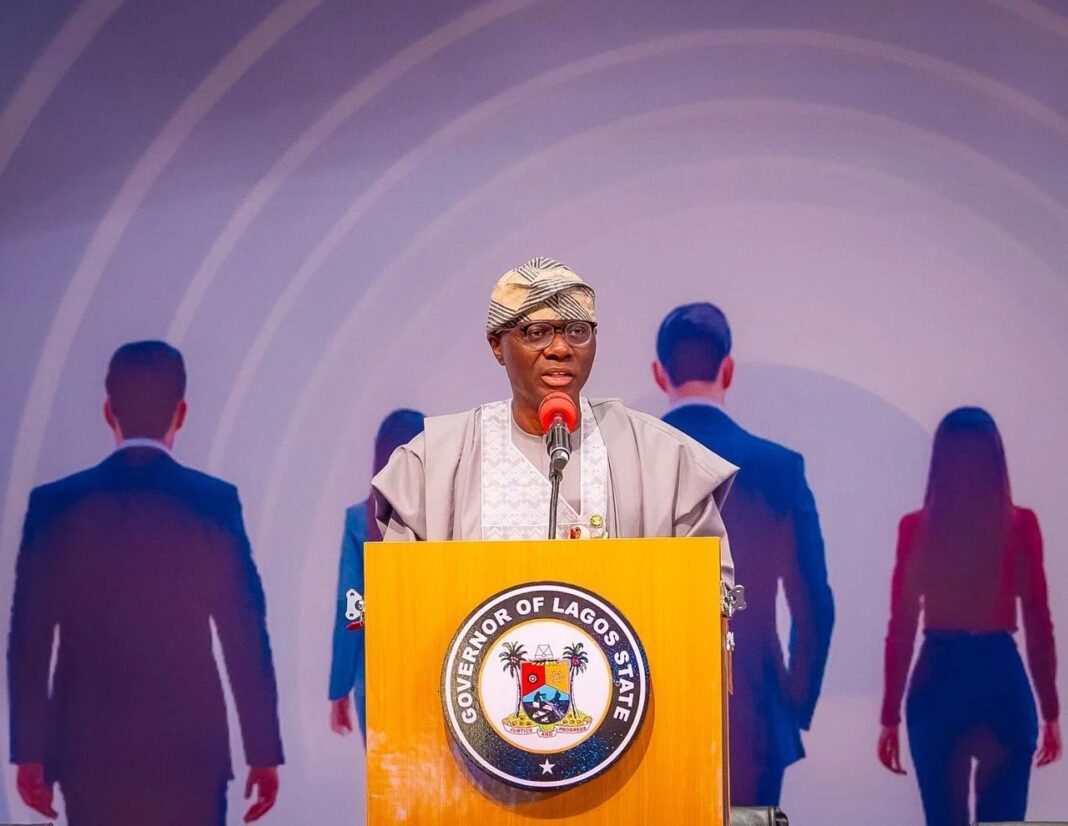
Sanwo-Olu disclosed this while speaking at the launch of the Lagos Education Access Fund and the inauguration of the Lagos State Universal Basic Education Board on Friday.
The governor stated that the executive order would strengthen measures against out-of-school children and increase accountability among parents, communities, and institutions responsible for ensuring that every school-age child attends school regularly.
“I will be issuing an executive order to back this up and ensure that we are putting our money where our mouth is.
“No child should be seen outside between 8:00 a.m. and 4:00 p.m. unless there is a very good reason that child is not in school,” he said.
He explained that LEAF represents a strategic shift from merely boosting enrolment statistics to focusing on actual learning outcomes, emphasising that access to school must translate into improved literacy, numeracy, and retention.
According to him, Lagos, through partnership with the Education Outcomes Fund (EOF) and development partners, will deploy $25 million in outcomes-based financing to support over 200,000 children statewide.
He said the programme would target more than 50,000 out-of-school children aged six to 14 for enrolment into mainstream education through structured community outreach and interventions aimed at removing barriers to attendance.
Sanwo-Olu added that the initiative would also support 150,000 pupils already in school by strengthening literacy and numeracy outcomes, ensuring that classroom attendance translates into real learning and long-term success.
“This initiative is not just about funding education; it is about ensuring every investment translates into real learning, real opportunity, and measurable outcomes for our children,” the governor said.
He noted that LEAF builds on Project Zero, an intervention launched in 2021 to address out-of-school children, which has already returned more than 36,000 children to formal education across the state.
“One of our most impactful initiatives in the last 10 years has been Project Zero, through which Lagos has identified, tracked, and enrolled more than 36,000 children,” he said.
Sanwo-Olu said that beyond returning children to school, the state had supported over 360 parents and guardians with vocational training to improve livelihoods and strengthen their capacity to sustain their children’s education.
According to him, beneficiaries were trained in fashion designing, soap making, catering, and hairdressing, reflecting the government’s recognition that family economic stability is critical to school retention and consistent attendance.
The governor also said his administration had expanded education infrastructure significantly, building more schools and classrooms in the last seven years than were delivered in the previous two decades.
“We have built more schools and classrooms in the last seven years than were built in the previous 20 years,” Sanwo-Olu said.
Highlighting the scale of expansion, he added:
“In one school complex alone, we are handing over 35 schools with capacity for close to 20,000 students.”
He described this as evidence of sustained investment in the education sector.
Sanwo-Olu stressed that meaningful progress in education cannot be achieved by government alone, noting that strong partnerships, shared responsibility, and collective commitment remain essential to securing children’s futures.
He thanked the Children’s Investment Fund Foundation, the Federal Ministry of Education, the Ministry of Foreign Affairs of Japan, and the Education Outcomes Fund for supporting Lagos in advancing a bold education reform model.
Earlier, EOF Chief Executive Officer, Amel Karboul, described Lagos as an example of bold leadership, saying the state is embracing an accountability-driven education financing model that is rarely adopted globally.
Karboul, a former Tunisian minister, said she was personally shaped by her country’s early decision to prioritise education spending, describing investment in education as the strongest form of national infrastructure.
“The most important infrastructure any nation can build is educated minds,” Karboul said.
She commended Lagos for adopting a model that prioritises learning, dignity, opportunity, and measurable results.
She explained that governments often spend heavily on education inputs such as buildings, books, and services, yet fail to achieve real outcomes such as improved learning, school retention, or sustainable employment.
“I have seen so much money spent that does not achieve results.
“Governments can buy goods and services, but for years they could not truly buy outcomes,” she said.